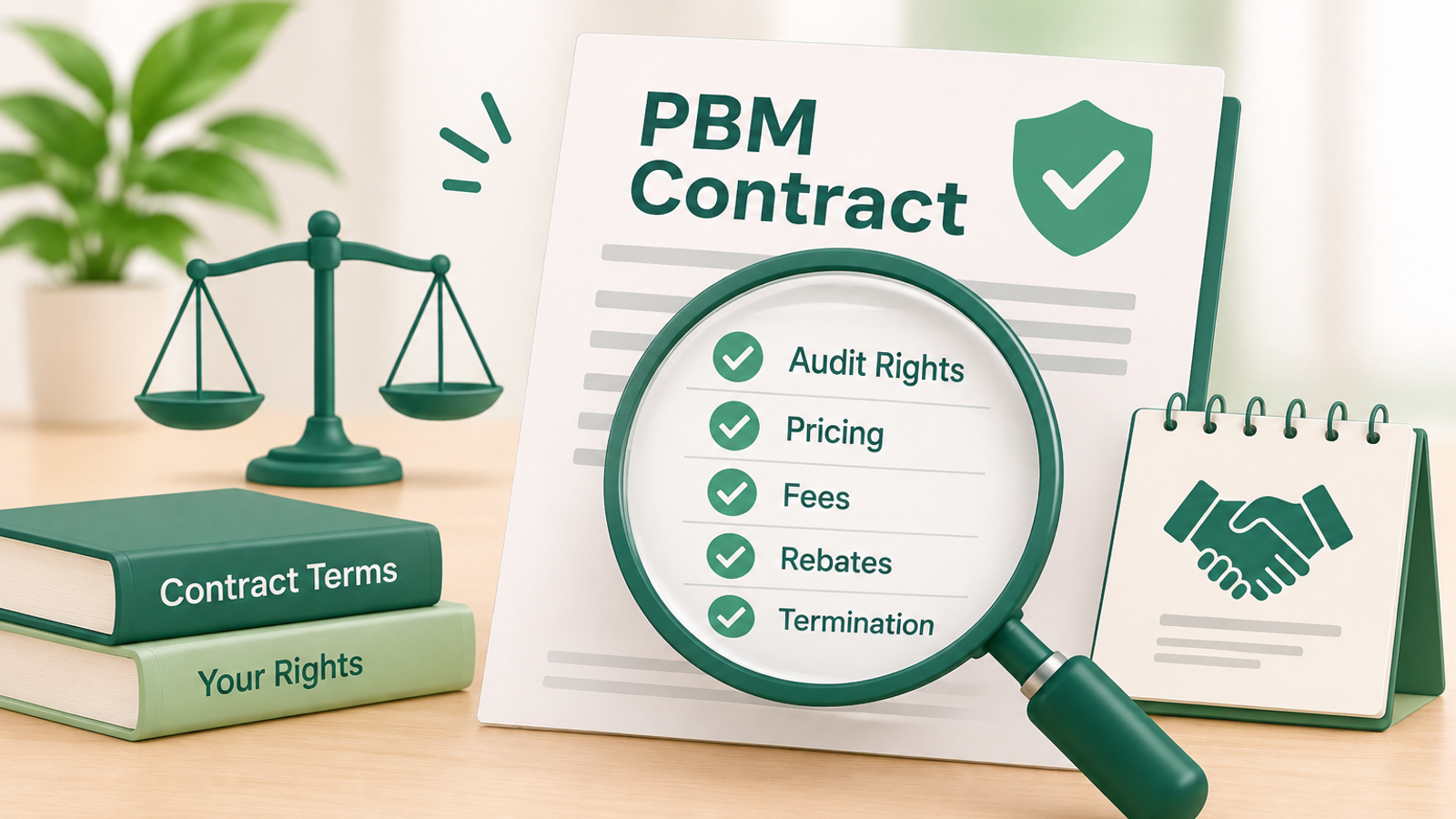
- PBM contracts define the responsibilities of the employer and the PBM.
- Audit rights determine which records employers can access and verify.
- Data ownership and reporting terms affect access to claims information and future audits.
- Pricing, administrative fees, and rebate provisions should be clearly defined in the agreement.
- Employers should review performance guarantees, renewal conditions, and termination rights before signing.
A pharmacy benefit manager (PBM) contract explains how a company's prescription benefits will be managed. It also sets out what the employer and PBM are responsible for. Before signing an agreement, employers should understand the terms that affect their plan. These include pricing, audit rights, data ownership, fees, and rebates. Some of these details can be easy to miss in a long contract. A PBM Contract Checklist helps employers review these details before signing or renewing an agreement. It also makes important PBM Contract Terms easier to understand. Here are the key areas to check when reviewing a PBM contract.
Review Audit Rights and Contract Access
Audit rights explain how an employer can check the PBM's work. They also set out which records the employer can review and how an audit can take place. These rights matter when checking claims, fees, rebates, and other contract requirements. Add the following points to your PBM Contract Checklist and review the related PBM Contract Terms before signing.
- Audit frequency: How often can the employer request an audit?
- Audit notice period: How much notice must the employer give before an audit?
- Records available for review: Can the employer access claims data, invoices, pharmacy reimbursement records, and rebate reports?
- Audit scope: Can the audit cover pricing, claim processing, administrative fees, and contract guarantees?
- Dispute process: What steps can the employer take if an audit finds a billing issue or contract difference?
Understand Data Ownership and Reporting Rights
Employers need access to plan data to review pharmacy benefit costs. The contract should explain who owns this data and how the employer can access it. This is also important when changing PBMs or working with a new benefits partner. Without clear data access terms, getting the right records later may be difficult. Include these points in your PBM Contract Checklist.
Data Ownership and Access
- Claims data ownership: Who owns the pharmacy claims data created under the plan?
- Employer data rights: Can the employer use its plan data for internal reviews and audits?
- Claim-level access: Can the employer request individual claim records instead of summary reports?
Reporting and Data Transfer
- Reporting frequency: How often will the PBM provide claims, utilization, pricing, and financial reports?
- Data format: Can reports be shared in a format that employers and their advisors can review?
- Data transfer after termination: How will the PBM provide plan records when the contract ends? Are there any deadlines or fees?
Examine Pricing, Fees, and Rebate Provisions
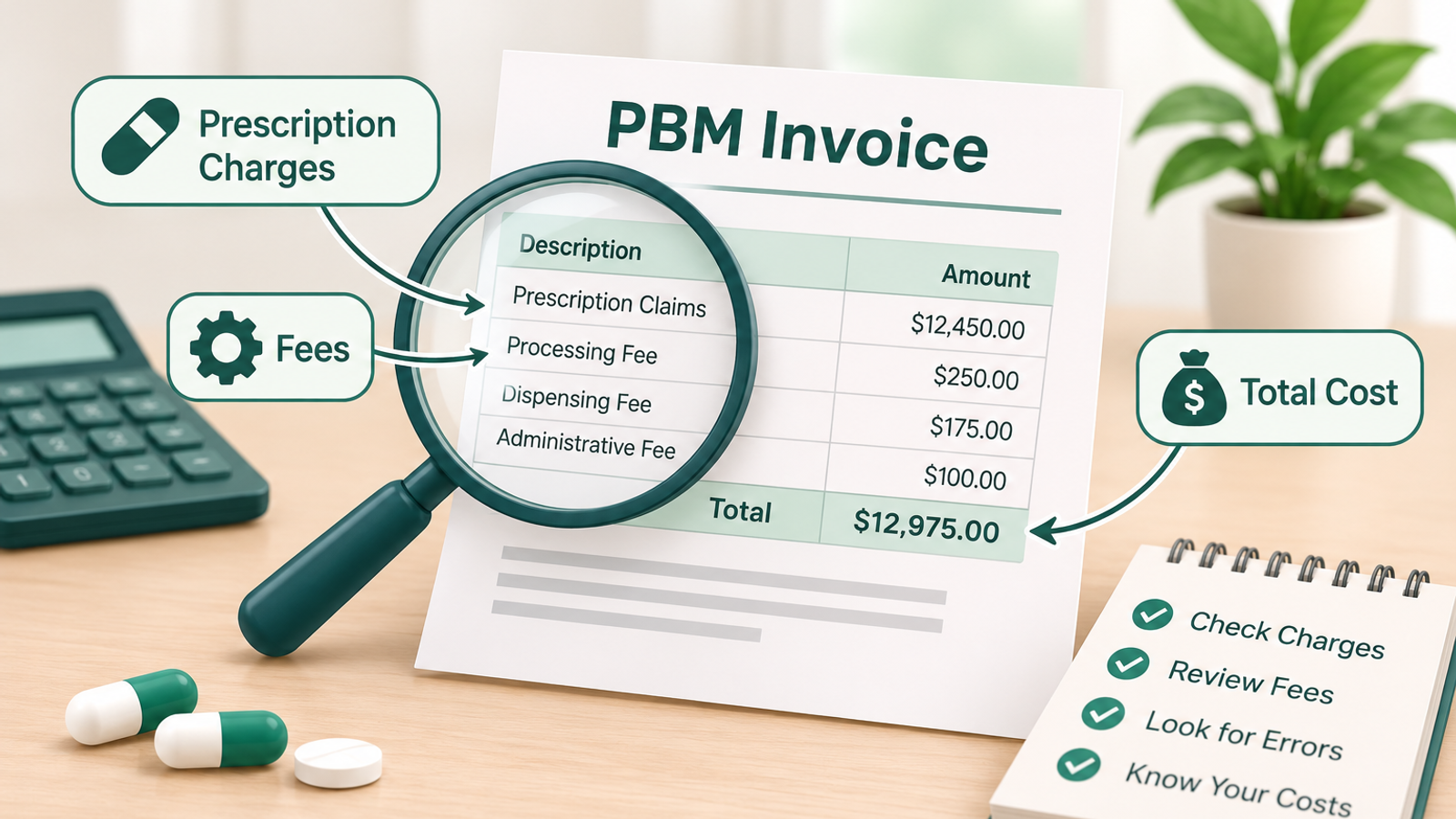
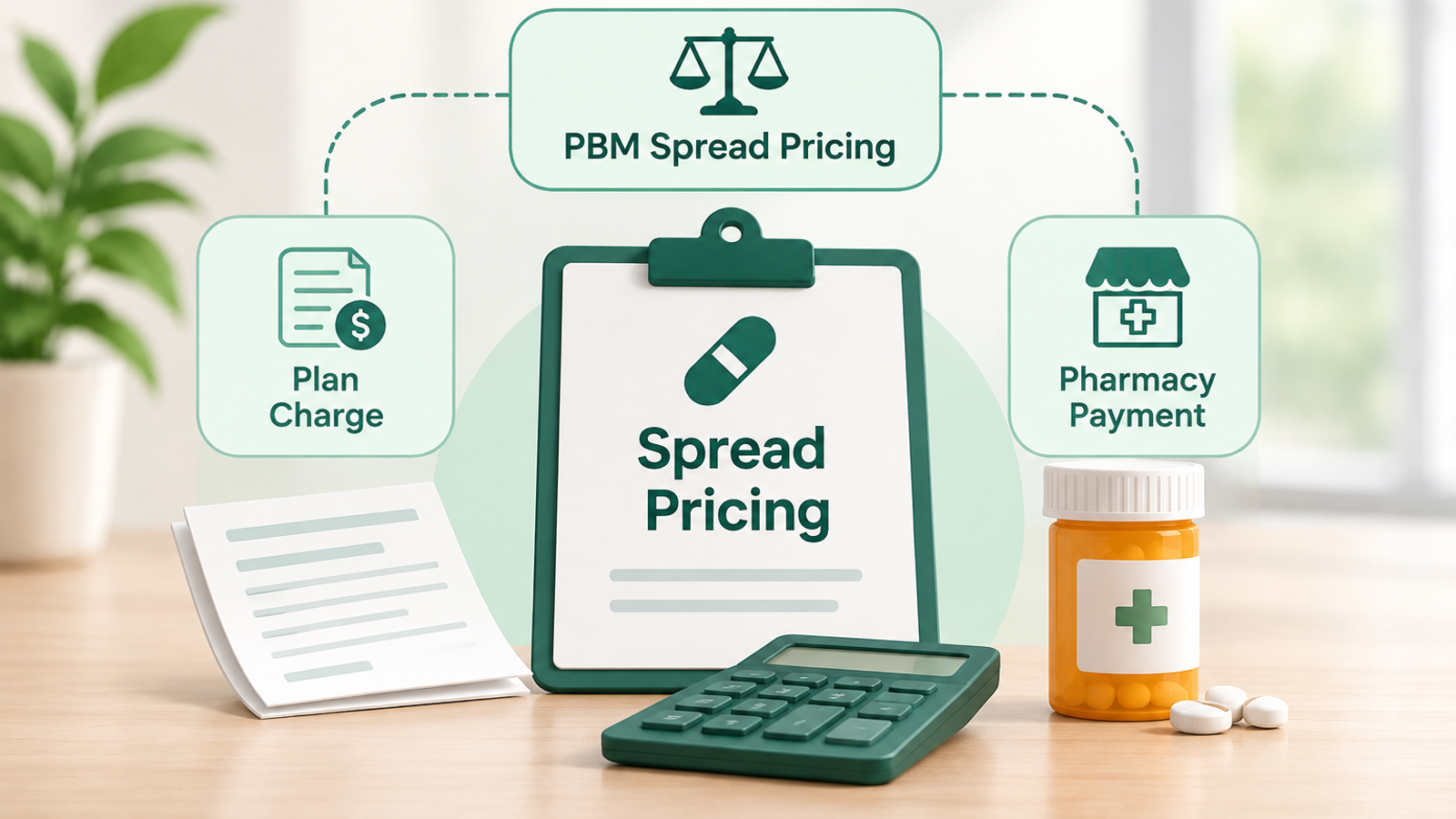
Pricing terms explain how a PBM charges for prescription claims and services. Employers should understand the pricing model used in the agreement. They should also check administrative fees, pharmacy reimbursement, and rebate provisions. These PBM Contract Terms help employers understand how their pharmacy benefit expenses are calculated.
- Pricing model: Does the agreement use spread pricing, pass-through pricing, or another model? Review Kanurra's PBM pricing page for more information about these pricing structures.
- Pharmacy reimbursement: How are pharmacies paid for prescription claims? Can the employer review the related claim-level amounts?
- Administrative fees: Are fees fixed, charged per member per month (PEPM), or calculated using another method?
- Rebate provisions: How are manufacturer rebates reported and credited to the plan? Check what rebates are received, how they are passed through, and when the plan receives the credits. See the PBM rebates guide for more information.
- Additional charges: Are there separate fees for services, programs, or other arrangements? Check whether each charge is listed in the agreement.
Check Contract Guarantees and Exit Provisions
A PBM contract should explain what services the PBM agrees to provide and how its performance will be measured. Employers should also understand what happens when the agreement ends. Review guarantees, renewal dates, termination rules, and data transfer requirements. These PBM Contract Terms can affect how employers manage their plan during and after the contract period.
- Performance guarantees: What guarantees are included for pricing, service levels, or other agreed requirements?
- Guarantee calculations: How are results measured, and which records are used to check performance?
- Renewal conditions: When does the contract renew? What notice is needed to make changes or stop renewal?
- Termination rights: Under what conditions can the employer end the agreement? Are there notice periods or fees?
- Transition support: What help will the PBM provide when moving claims data, plan records, and member information to a new provider?
Review Your PBM Contract Before Signing
A PBM contract affects how prescription claims are priced, how fees are charged, and how employers access plan data. Reviewing audit rights, data ownership, pricing, and termination rules helps employers understand what they are agreeing to.
Use a PBM Contract Checklist to review the main provisions and note any terms that need clarification. Kanurra encourages employers to look beyond headline pricing when reviewing a PBM agreement. Checking audit rights, data access, fee calculations, and rebate provisions can help employers ask clearer questions and understand what their contract allows them to verify.
Conclusion
A PBM contract defines how prescription benefits are priced, managed, and reported. Reviewing audit rights, data access, pricing terms, and termination conditions helps employers understand their agreement and identify areas that need clarification. A regular contract review also helps employers check whether claims, fees, and rebate reporting follow the agreed terms. Kanurra focuses on transparent PBM pricing, claim-level visibility, and clearly defined administrative fees. Want to check whether your PBM follows its contract terms? Request a PBM audit with Kanurra to review your pricing, claims, and fees.
Frequently asked questions
What should employers check before signing a PBM contract?
Review audit rights, data ownership, pricing models, administrative fees, rebate terms, and termination conditions.
Why are audit rights important in a PBM contract?
Audit rights allow employers to review claims, fees, rebates, and other records to check whether the PBM follows the agreed contract terms.
Who owns the data in a PBM contract?
Data ownership depends on the agreement. Employers should confirm their rights to access, use, and transfer plan and claims data.
What pricing terms should employers review in a PBM contract?
Check spread pricing, pass-through pricing, pharmacy reimbursement, administrative fees, and how rebates are reported and credited.
What happens when a PBM contract ends?
The agreement should explain termination notice, applicable fees, data transfer, and support for moving the plan to another PBM.
Written by
Kanurra