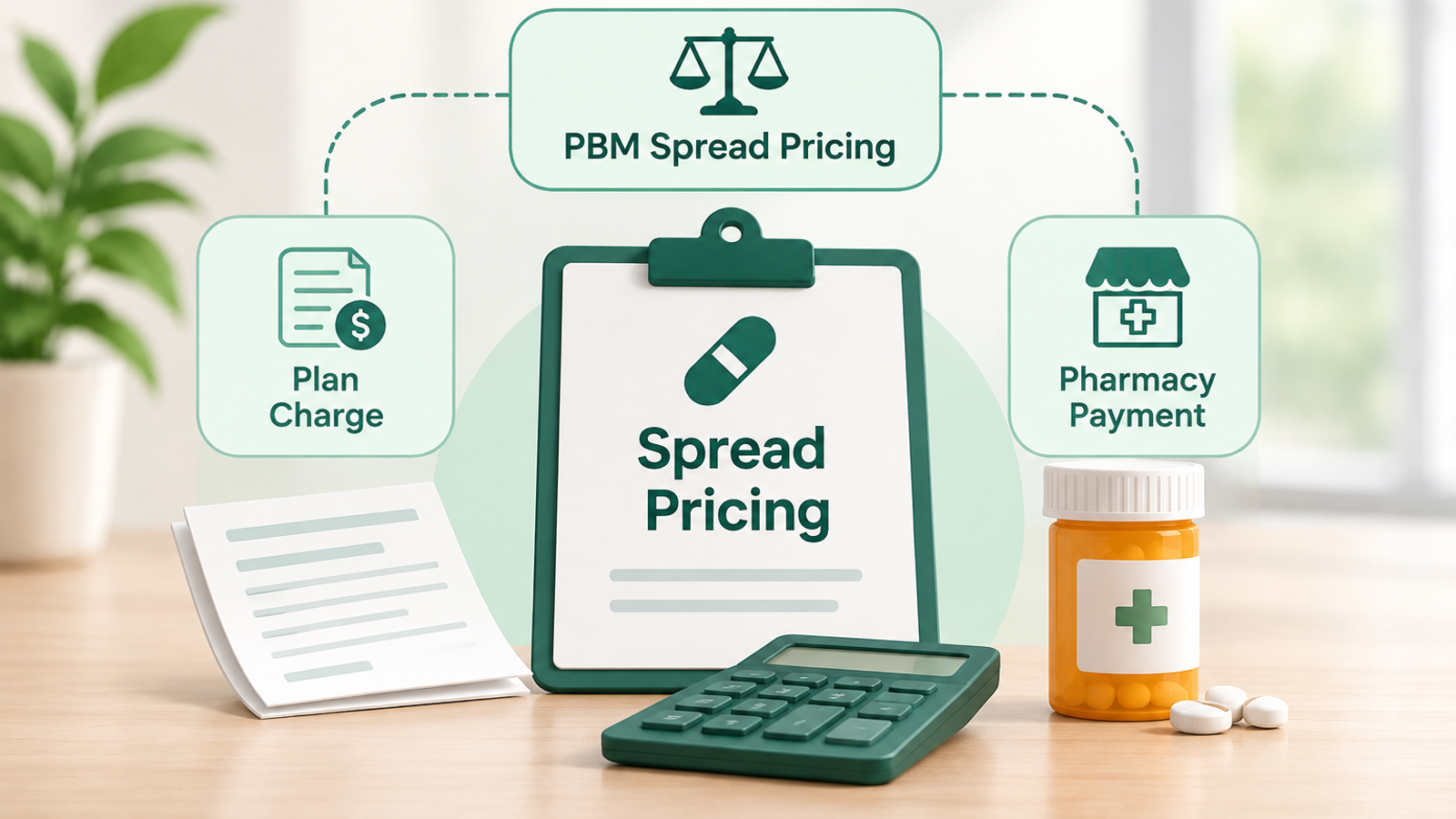
- PBM spread pricing is the difference between what a health plan pays and what the PBM pays the pharmacy.
- Employers can calculate the spread by comparing both payments for the same prescription.
- Claim reversals, adjustments, and contract terms can affect the final amounts.
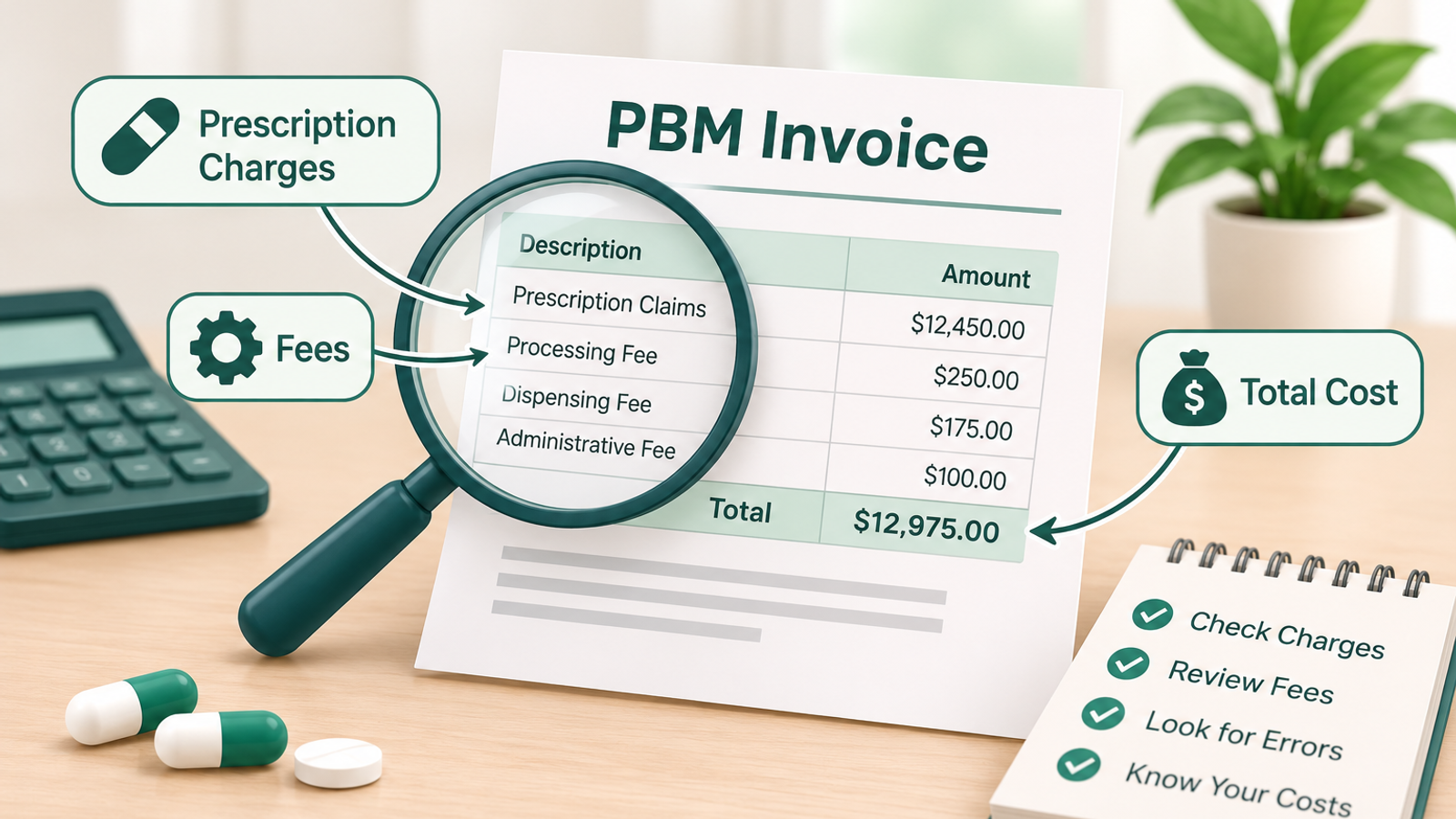
- Administrative fees and manufacturer rebates should be reviewed separately from spread pricing.
- Employers should review claim-level records and contracts to understand their total PBM costs.
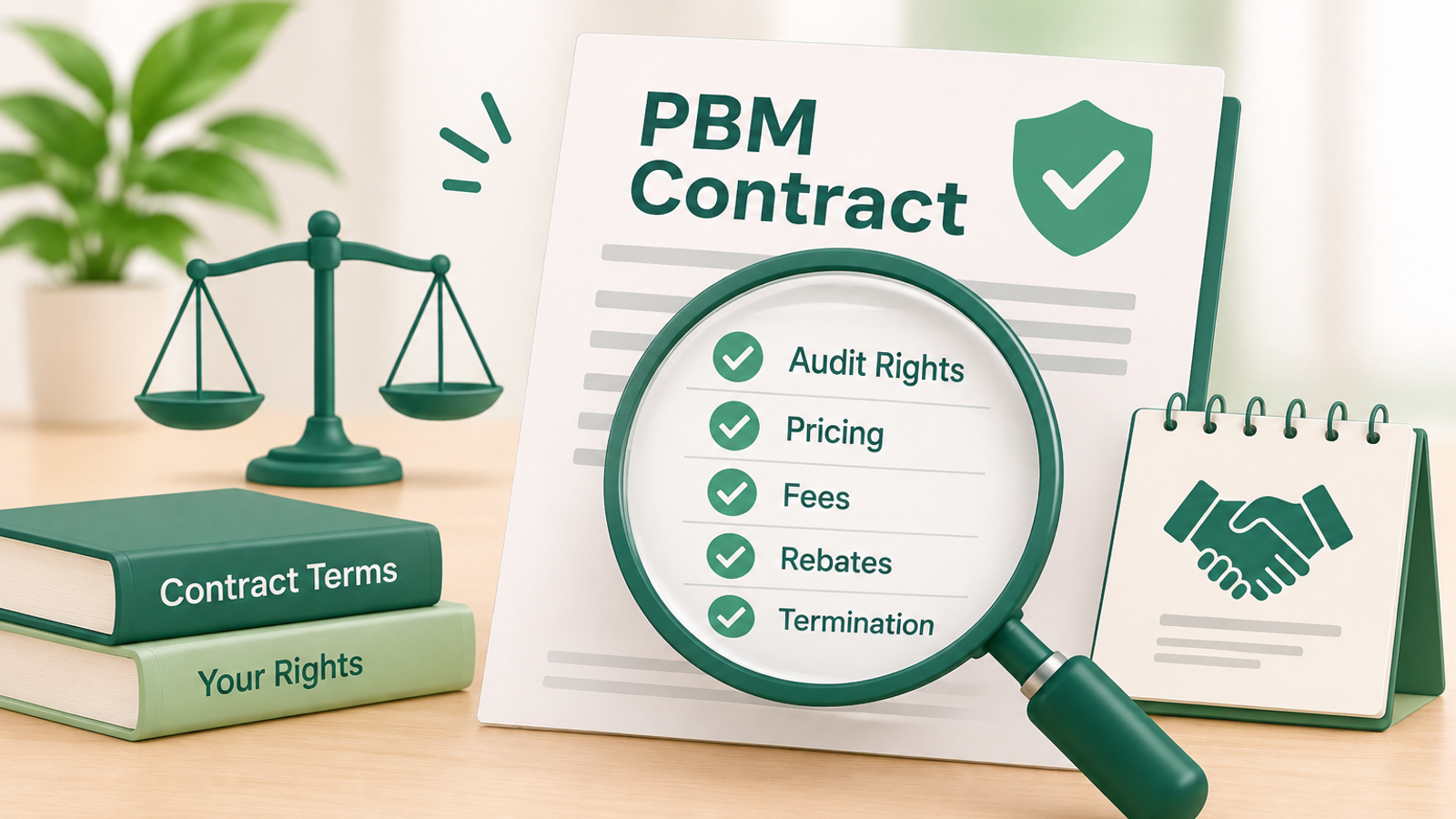
When reviewing a pharmacy benefit manager (PBM) contract, employers may see different amounts for the same prescription. Understanding why these amounts differ can help them evaluate their pharmacy benefit costs. PBM spread pricing is one arrangement in which the health plan pays the PBM more than the PBM pays the pharmacy for a prescription. The difference between these payments is known as the spread. A single prescription provides a simple way to understand how this works. The example in this article uses hypothetical figures to explain the calculation, not actual market rates. Contract terms, pharmacy agreements, and claim adjustments can affect the final amounts. Employers should also consider administrative fees and manufacturer rebates separately when reviewing their overall PBM costs. Kanurra’s PBM pricing page provides further context on pricing transparency.
What PBM Spread Pricing Means
Under a spread pricing arrangement, a PBM receives payment from a health plan for a prescription and pays the dispensing pharmacy according to its agreement with that pharmacy. The difference between the two amounts is the spread. This difference is separate from any administrative fees listed in the contract, although the exact arrangement depends on the agreement. Understanding PBM spread pricing starts with comparing the plan’s charge with the payment made to the pharmacy for the same claim.
- Plan payment: The amount the health plan is charged for a prescription.
- Pharmacy payment: The amount the PBM pays the pharmacy for dispensing the medication.
- The spread: The difference between the plan payment and the pharmacy payment, subject to relevant adjustments.
- Contract terms: The agreement explains how payments, dispensing fees, and adjustments are handled.
- Claim records: Matching records help employers compare the two amounts without mixing different prescriptions or reporting periods.
Employers evaluating their current arrangements can use Kanurra’s PBM audit checklist to help organize the questions and records involved in a pricing review.
A Worked Example Using One Prescription
Consider a hypothetical prescription for which the health plan is charged $90 and the pharmacy receives $70 from the PBM. The difference is $20. This is the spread in the simplified example, calculated by subtracting the pharmacy payment from the plan charge. These figures are for illustration only and do not represent typical pricing or expected savings.
To verify a real claim, employers need to confirm that both amounts refer to the same prescription and that the figures follow the definitions in their contract. The plan charge may appear in a claims report or invoice, while the pharmacy payment may be recorded separately.
- Step 1 - Identify the claim: Match the prescription using available details, such as the claim identifier, fill date, and pharmacy.
- Step 2 - Check the plan charge: Find the amount billed to the health plan. In this example, it is $90.
- Step 3 - Confirm the pharmacy payment: Find the amount paid to the pharmacy, which is $70 in this example.
- Step 4 - Calculate the spread: Subtract $70 from $90 to get a $20 difference.
- Step 5 - Verify adjustments: Check for reversals, corrections, or other contract terms that could change the final calculation.
What the Example Can Tell Employers
A single prescription helps explain the calculation, but it cannot show the full cost of a PBM arrangement. Employers need to review claim records alongside their contracts, invoices, administrative fees, and rebate reports. PBM spread pricing should be assessed using consistent data and the definitions set out in the agreement. A difference between two payments does not, by itself, explain every component of the PBM’s revenue or the employer’s total pharmacy spending.
- Compare the same transaction: Confirm that the plan charge and pharmacy payment relate to the same prescription and benefit terms.
- Review claim corrections: Reversed or resubmitted claims may change the amounts shown in reports.
- Separate administrative fees: Check which fees are billed independently rather than treating every charge as part of the spread.
- Examine rebates separately: Manufacturer rebates follow their own contractual arrangements and reporting timelines. A claim-level spread does not reveal the rebate amount.
- Review multiple claims: Looking across a representative group of claims can help employers identify questions that a single example cannot answer.
For a closer look at how manufacturer rebates are handled, read Kanurra’s PBM rebates guide, which explains rebate pass-through in general terms.
How Employers Can Review PBM Pricing
A useful review brings together the PBM contract, claim-level data, invoices, and pharmacy payment records. Employers can then check whether the charges match the agreed pricing terms and whether the available reports provide enough detail to understand the payments. Kanurra describes its pricing approach as having no spread or markup on claims, with manufacturer rebates credited to the plan and a disclosed per-employee-per-month administrative fee. Employers should review the applicable contract and supporting documentation when comparing PBM arrangements.
- Request claim-level records: Ask for claims data, pharmacy payment reports, invoices, and relevant reconciliation records.
- Check pricing definitions: Review how the contract defines plan charges, pharmacy payments, fees, and adjustments.
- Understand rebate reporting: Ask how manufacturer rebates are reported and credited under the agreement.
- Consider the plan structure: Employers with level-funded plans can review Kanurra’s level-funded PBM resource for information relevant to that arrangement.
- Review your current arrangement: Visit Kanurra’s PBM pricing page or request a claims audit to discuss what your records show.
Conclusion
PBM spread pricing becomes easier to understand when employers compare the amount charged to the health plan with the amount paid to the pharmacy for the same prescription. The difference is a useful starting point, but it does not explain the entire PBM pricing arrangement. Contract terms, administrative fees, rebates, and claim adjustments also matter. Reviewing these details together helps employers ask clearer questions and make informed comparisons between PBM arrangements. For a clearer understanding of your PBM costs, contact Kanurra to review your current prescription claims and pricing structure.
Frequently asked questions
What is PBM spread pricing?
PBM spread pricing is an arrangement where a pharmacy benefit manager charges a health plan more than it pays the pharmacy for a prescription. The difference between these amounts is called the spread.
How do you calculate PBM spread pricing?
Subtract the amount paid to the pharmacy from the amount charged to the health plan. For example, a $90 plan charge minus a $70 pharmacy payment results in a $20 spread.
What is pharmacy reimbursement in PBM pricing?
Pharmacy reimbursement refers to the amount paid to a pharmacy for dispensing a prescription. Comparing this amount with the plan's charge can help employers understand the spread.
Is PBM spread pricing the same as an administrative fee?
No, the spread is the difference between the plan charge and the pharmacy payment, while an administrative fee is a separate contractual charge. The exact treatment depends on the PBM agreement.
How can employers identify spread pricing in their PBM contracts?
Employers can compare claim-level data, pharmacy payment records, invoices, and contract terms for the same prescriptions. A PBM audit can help clarify how the payments are calculated and reported.
Written by
Kanurra